Preserving a Wildcat legacy
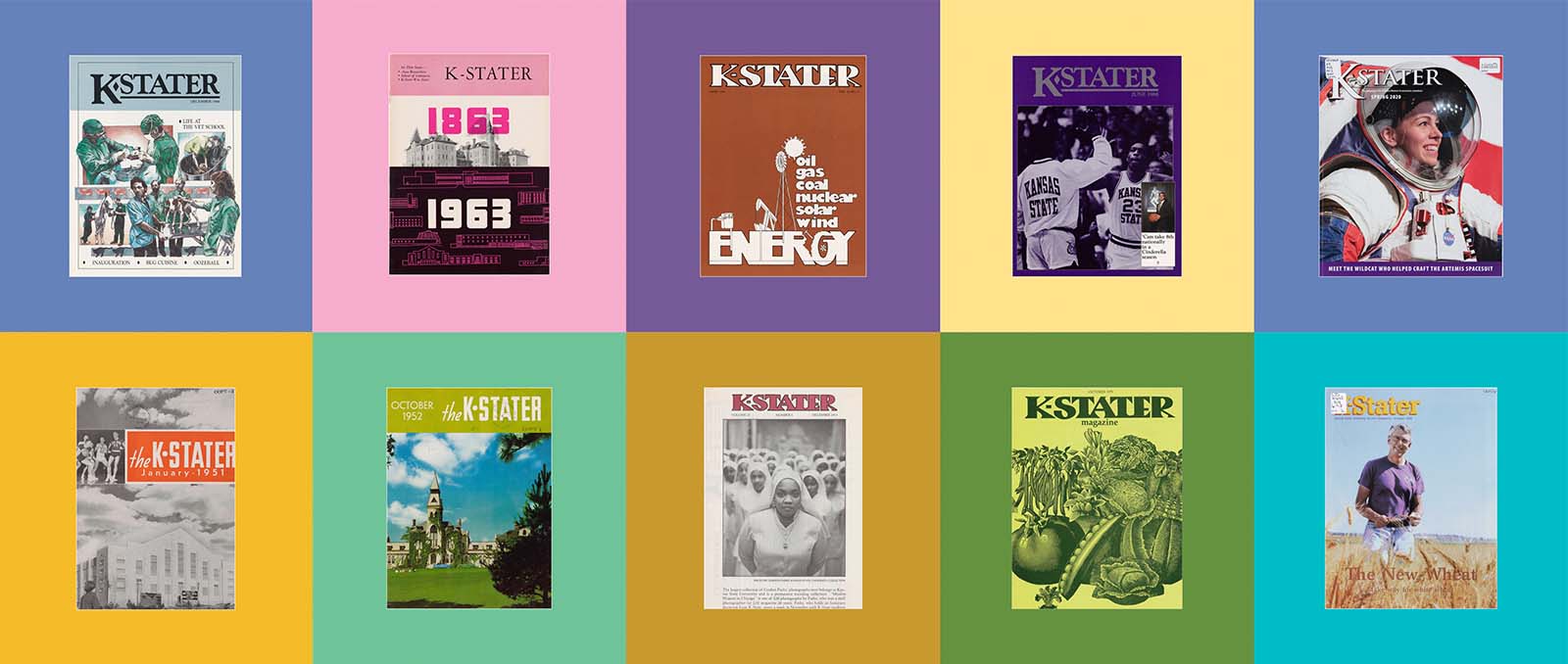
More than 70 years of K-Stater Magazine is now available online
By Lexi Liby
K-State Libraries and the Alumni Association have partnered to digitize more than 70 years of K-Stater magazine, preserving the university’s history and making the publication accessible to future generations.
Published quarterly, K-Stater has long served as a record of campus life, capturing stories, milestones and memories that define Kansas State University. Digitizing the magazine was a natural next step in sharing K-State’s legacy through important campus publications.
“After digitizing the Collegian newspaper, yearbooks and catalogs, K-Stater was the logical next step to expand the university’s digital archives,” said Cliff Hight, head of the Richard L. D. and Marjorie J. Morse Department of Archives and Special Collections.
The partnership with the Alumni Association was essential to the project’s success. Since K-Stater is a key membership benefit, both organizations worked carefully to balance public access with preserving exclusive content for members.
“We didn’t own the copyright, so we had to work closely with the Alumni Association to make sure the project was done in a way they were comfortable with,” Hight said. “We also wanted to be courteous because not all issues are available to everyone.”
Tim Schrag, senior editor of K-Stater, emphasized the importance of this balance.
“We are a membership organization, and the K-Stater is one of the major benefits,” he said. “We want to protect that access and make sure our members receive something exclusive and special. Our agreement allows the library to publish issues older than three years, while newer issues remain exclusive to members.”
The project’s timing aligned perfectly with the opening of the Butler Digitization Lab in 2021, a gift from the Butler Family Community Foundation supporting the Libraries' digitization efforts.
“We wanted to have a project that would show what the lab could do,” Hight explained. “We also wanted a project that had a wide range of benefits for the K-State community, and the K-Stater digitization project definitely fits those criteria.”
Behind the scenes, the process began with unbound copies of K-Stater. In some cases, the older back issues were the only remaining unbound copies in existence. Each page was carefully digitized using a high-resolution camera setup, matching the layout of the original spread.
After the images were captured, the team created metadata to make each issue fully searchable. The goal was to replicate the experience of reading the digital magazine available to Alumni Association members.
“We wanted to ensure this information was out there for the K-State community or anyone who wants to learn about our campus or alumni,” Schrag said. “We are a flagship publication for the campus, and it’s only fitting that we are digitized and accessible to everyone.”
“K-Stater is a great timestamp of what happened on our campus in a quarter. Major updates and unique stories about university and alumni life are all captured there. This will be a valuable historical document moving forward. If we’ve done our job right, it preserves life on campus for years to come. People five, 10 or 15 years from now who want to learn about those times will have access to trusted information and a reliable publication.”
With about 350 issues now preserved online, K-State’s history is easier to explore than ever before.